


Greenville Alimony Lawyer
One spouse needs support to cover the rent. The other is being asked to pay it. Elliott Frazier Family Law represents spouses on either side of that question, and our managing attorney’s MBA helps us test the numbers behind every alimony request.






We Represent Spouses Asking for Alimony and Spouses Paying It
Angela Frazier is a Greenville alimony attorney who handles spousal support cases before the Greenville County Family Court. She represents both the spouse asking for support and the spouse being asked to pay it, and she has practiced law since 2004.
Whichever side of the case you are on, your objective is the same: an alimony order you can live with after the marriage ends. In South Carolina, a judge decides whether support is owed, what type fits, and how long it lasts, based on statutory factors and the evidence each spouse presents. Spouses can also settle alimony by agreement, keeping the terms in their hands rather than the court’s.
Alimony Defined in South Carolina
Alimony is a form of spousal support one spouse pays the other during or after a divorce or separate maintenance case. The primary purposes of alimony are to help financially dependent spouses maintain the lifestyles they enjoyed during marriage and to ensure they can continue meeting their needs.
Courts understand that it can be difficult to pay one’s bills when a spouse goes from a two-income earning household down to one because of divorce. Alimony can ease that strain.
In South Carolina alimony law, there is both a supporting spouse (the one who pays alimony) and a dependent spouse (the one who receives it). The dependent spouse must prove that he or she actually needs the money, because alimony is not automatically guaranteed in divorce.
When Should a Spouse Seek Alimony

During your separation period, you may begin to realize how difficult it is to live on your own without the income of your husband or wife. An attorney may advise you to file for divorce or seek separate maintenance and request temporary (pendente lite) support while the case is pending. If paying your bills will remain a challenge after the case ends, your lawyer may ask the court for ongoing alimony in the final order.
There are often marriages in which one spouse gives up a career or an education to raise children, only to find themselves economically vulnerable after the marriage ends. Re-entering the job market after a significant break can be challenging, and alimony can help.
Why Would a Spouse Oppose Paying Alimony
On the other hand, paying spouses often oppose alimony requests. Simply not wanting to pay or feeling the other spouse does not deserve support is not legally sufficient to defeat a claim. You need stronger evidence and legal arguments to oppose an alimony request successfully.
For instance, the other spouse may be highly educated and able to return to the job market with relative ease. If this cannot defeat the spouse’s alimony claim outright, it may at least limit the amount and duration of payments. Another reason to oppose alimony is that the amount being asked of you may not be feasible given your income and expenses.
What Are the Different Types of Alimony in South Carolina
Every marriage is unique, and so are the financial circumstances of every ex-husband and ex-wife. In recognition of this, South Carolina law (S.C. Code Ann. § 20-3-130) permits multiple types of alimony, including:
Periodic
This is one of the most common arrangements, in which one spouse makes monthly payments to the other. Periodic alimony can be modified based on a substantial change in circumstances. It ends if the dependent spouse remarries or enters a continued cohabitation, or if either spouse dies.
Under the statute, “continued cohabitation” means the supported spouse lives with another person in a romantic relationship for 90 or more consecutive days, unless the parties agreed otherwise in writing. A court may also find cohabitation over shorter stretches if the two separate periodically to avoid the 90-day mark.
Lump Sum
Lump sum alimony refers to a set, fixed amount that is paid all at once or over time. The total amount cannot change and will only terminate if the dependent spouse dies. Courts may choose this type when alimony is appropriate but should be a fixed, final amount.
Rehabilitative
The purpose of this alimony is to help a spouse become self-supporting through education or training. It ends upon the death of either spouse or the dependent spouse’s remarriage or cohabitation. It may also end upon the occurrence of a specific event and can be modified in some cases.
Reimbursement
Spouses often invest in their partners’ education or careers during the marriage, for example, by paying for a spouse's education. Reimbursement alimony compensates that spouse from the other’s future earnings and may be paid in a lump sum or periodically. It is not modifiable, and it terminates upon the death of either spouse or the dependent spouse’s remarriage or cohabitation.
Separate Maintenance
This option is available if spouses do not want to divorce but would like to live separately. Alimony may be awarded if the individual circumstances of the case permit it.
Other Types
Depending on the unique circumstances of a particular marriage, other types of alimony may be appropriate. Your alimony attorney can advise you.
Temporary (Pendente Lite) Support
Temporary support, known as pendente lite support, is about timing rather than the form of alimony. While a divorce or separate maintenance case is pending, either spouse can ask the court for support that covers the period before the final order. The final order can then set alimony going forward.
#cta_start
Your Next Chapter Shouldn’t Start with a Financial Question Mark
Alimony decisions follow you for years. Our team will sit down with you, listen to your story, and help you see where you stand before anything is signed.
#cta_end
What Factors Go Into Awarding Alimony
Once a spouse proves an actual need for support, the court decides the type, amount, and duration of alimony by evaluating factors such as:
- Length of the marriage
- The spouses' ages at marriage and at the time of the divorce or separate maintenance action
- Both spouses' physical and emotional health
- The spouses' educational backgrounds and whether more education is needed to re-enter the workforce
- Each spouse's employment history, earnings, and earning potential
- The spouses' standard of living during the marriage
- Current and anticipated expenses and needs of both spouses
- The assets of each spouse, including property that is awarded in divorce proceedings
- Child custody, especially if it prevents or limits a parent’s ability to work
- Marital misconduct or fault, if it affected the couple’s finances or contributed to the breakup
- Other support obligations, whether from a prior marriage or another source
- The tax consequences of the type of support awarded
- Any other relevant factors
The judge weighs these factors together. Apart from the adultery bar, no single factor decides the case on its own, which is why evidence on each one matters.
Does Adultery Impact a Spouse’s Eligibility for Alimony
Judges can consider marital misconduct when it affected the couple’s finances or contributed to the breakup. Adultery goes further: a spouse who commits adultery cannot receive alimony in South Carolina. The bar applies to adultery committed before the earliest of these events: the formal signing of a written property or marital settlement agreement, or the court’s entry of a permanent order of separate maintenance and support or a permanent order approving a settlement agreement.
Settling Alimony or Asking a Judge to Decide
Spouses in Greenville can settle the alimony issue in two ways: by agreeing on it in negotiation or mediation, or by asking a Greenville County Family Court judge to decide it. Reid Tidwell, an attorney at the firm, serves as a Family Court Mediator.
| Agreement Through Negotiation or Mediation | Ruling by a Family Court Judge | |
|---|---|---|
| Who decides | The two spouses, with their lawyers | The judge, applying the factors above |
| What can be traded | Alimony can be balanced against other terms, such as a larger share of marital property in exchange for less alimony | The judge sets type, amount, and duration from the evidence presented |
| Suits spouses who | Can still talk to each other and want a say in the terms | Cannot agree, or face a claim one side will not negotiate on |
| Less suited when | One spouse is hiding information or will not engage | The spouses would rather keep the decision in their own hands |
Either route should end in a court-approved order. That order is what can later be enforced or, if its terms allow, modified. A private arrangement between the spouses does not carry the same force. Spouses can also agree in writing, with court approval, to make alimony nonmodifiable.
How to Enforce Unpaid Alimony
As with any family court order obligating a spouse to do something, the supporting spouse may fail to pay alimony to the dependent spouse. Judges take their orders seriously and have several ways to enforce alimony, including:
- Income withholding from the paying spouse’s wages
- Holding the paying spouse in contempt of court, which can lead to fines, a public works (community service) sentence, or even jail
- Ordering the paying spouse to cover the other spouse’s attorney’s fees and court costs
The spouse who allegedly didn’t pay alimony will get a chance to defend themselves at a court hearing. Defenses could include that the nonpayment was not willful, such as a genuine inability to pay after a job loss, or that the order does not require what the other spouse claims it does. If you find yourself unable to pay alimony as ordered, don’t wait for contempt allegations to be filed. Work with a spousal support lawyer to address, and potentially modify, the alimony order.
Asking the Court to Modify Alimony
If the type of alimony is modifiable, either party can file a petition with the court to increase, decrease, or terminate payments. The general rule for modifying South Carolina family court orders, including those concerning alimony, is that there must be evidence of a substantial, unanticipated change in circumstances since the last court order. Reasons which may support modifying alimony include:
- The supporting spouse loses their job or has a pay cut.
- A change in the financial needs of the dependent spouse.
- The supporting spouse’s retirement, which entitles either party to a hearing on whether circumstances have changed.
Parties should never privately modify a court order for alimony. The judge must hear evidence and arguments, make findings of fact, and issue an order that modifies or terminates alimony. Until then, the old order remains enforceable.
Contact Our Greenville Alimony Attorney
The law firm of Elliott Frazier Family Law, LLC understands the importance of alimony, no matter if you are the one requesting or being asked to pay it. Our firm handles alimony cases from the first filing through enforcement and modification, and is ready to address your specific needs and concerns.
To learn more, contact our Greenville, SC spousal support lawyer, Angela Frazier. Schedule a case review using our online form or call (864) 214-3621.
Are You in Need of a Family Lawyer?
Experienced family law team serving Upstate South Carolina with the compassion, strategy, and tenacity your case demands.

Reviews
Meet Our Team






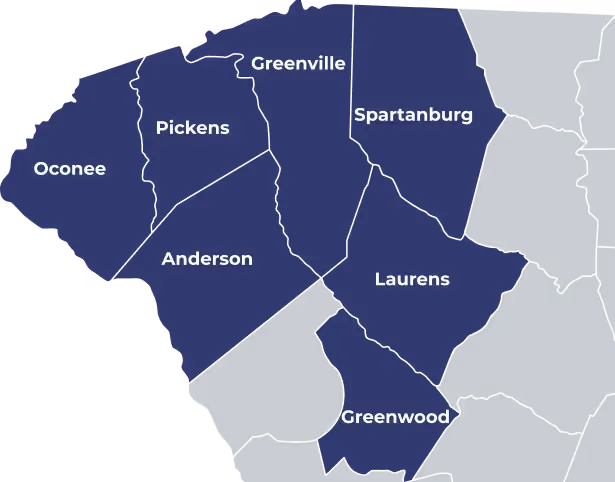
Serving All of Upstate South Carolina
We proudly provide compassionate family law representation across the Upstate of South Carolina. Our primary service areas include:
- Greenville County
- Oconee County
- Spartanburg County
- Pickens County
- Anderson County
- Laurens County
- Greenwood County

Take the First Step Toward Resolution
Whether you're seeking alimony in Greenville or being asked to pay it, it helps to know where you stand before you act. Elliott Frazier Family Law can walk you through your options. Tell us what you are facing, and schedule a consultation to map out the next right step.
FAQs
There is no single answer. The court sets the term it considers appropriate, and the length depends on the type of alimony. Lump sum alimony is a fixed total. Rehabilitative alimony usually ends at a set event, such as finishing a training program, and can also end on remarriage, continued cohabitation, or either spouse’s death. Periodic alimony continues until the court changes it or a termination event occurs: the death of either spouse, or the dependent spouse’s remarriage or continued cohabitation.
South Carolina's alimony statute does not set a formula or a fixed percentage. The court weighs the factors listed in S.C. Code Ann. § 20-3-130(C) and sets an amount based on the facts of your case.
Alimony can be requested in a divorce or separate maintenance case. The spouse asking for it must show a need for support, and a spouse who commits adultery before a set point in the case cannot receive it. If the claim proceeds, the court weighs the statutory factors.