.avif)

Greenville Child Support Lawyer
Raising a child on one income, or stretching to cover two households, can put real and lasting stress on your finances. Whether you're seeking support or being asked to pay it, you need a number that's accurate and a court order you can count on.






Getting the Numbers Right for Your Family
Our founder, Angela Frazier, brings a Master of Business Administration to a part of family law that's ultimately about math: income, expenses, and what a child actually needs. That financial background matters most when a parent is self-employed, paid on commission, or has income that isn't showing up cleanly on a pay stub.
Whether you're establishing support for the first time, requesting a modification, or trying to collect what you're already owed, our team builds documentation to support the amount we ask the court to order.
How Child Support Works in South Carolina
South Carolina uses state guidelines to calculate support, so the outcome isn't left to guesswork or negotiation alone.
How the Amount Is Calculated
The South Carolina Department of Social Services applies a formula built around several core factors:
- Both parents' incomes and reasonable expenses;
- How much time the child spends with each parent;
- The number of children being supported;
- Health insurance, daycare, and education costs;
- Any special needs or extraordinary expenses.
Judges can deviate from the guideline amount, but only for a compelling, documented reason. Getting the inputs right the first time, especially income for a self-employed parent, is often the difference between a fair order and one that gets contested for years.
Modifying an Existing Order
A support order isn't permanent, though. If either parent's income changes significantly, the child's needs change, or custody arrangements shift, South Carolina law allows a request to modify the order. The parent requesting the change must show a substantial change in circumstances since the last order was entered, not just a preference for a different amount.
Collecting on an Order That Isn't Being Paid
If support isn't coming in, you don't have to just wait it out. South Carolina courts can hold a non-paying parent in contempt and enforce the order through wage garnishment, tax refund interception, and even suspension of a driver's or professional license. We help you build the record needed to bring that enforcement action and get support flowing again.
#cta_start
Let's Protect Your Time with Your Child
You shouldn't have to fight for a place in your child's life. Reach out today, and let's put a clear, enforceable plan in place.
#cta_end
Why Choose Us
-
.svg) CompassionWe know how heavy this process feels. We treat you and your family with genuine care and dignity as you navigate this transition.
CompassionWe know how heavy this process feels. We treat you and your family with genuine care and dignity as you navigate this transition. -
 AdvocacyWe provide clear, practical strategies tailored to your specific situation, helping you step into your next chapter with confidence.
 -
 IntegrityWe believe in giving you straight answers. Our honest, transparent guidance ensures you always know exactly where your case stands and what to expect next.
 -
.svg) ExcellenceWe bring sharp attention to detail and deep legal experience to the table, ensuring your family's most personal matters are handled properly.
ExcellenceWe bring sharp attention to detail and deep legal experience to the table, ensuring your family's most personal matters are handled properly. -
.svg) ProtectionWe look out for what matters most to you. We work strategically to protect your financial stability and safeguard your children's well-being.
ProtectionWe look out for what matters most to you. We work strategically to protect your financial stability and safeguard your children's well-being.
Get a Fair Support Order
We build the documentation needed for an accurate number, whether you're paying or receiving support.

What Our Clients Say
Meet Our Team

.avif)


.avif)
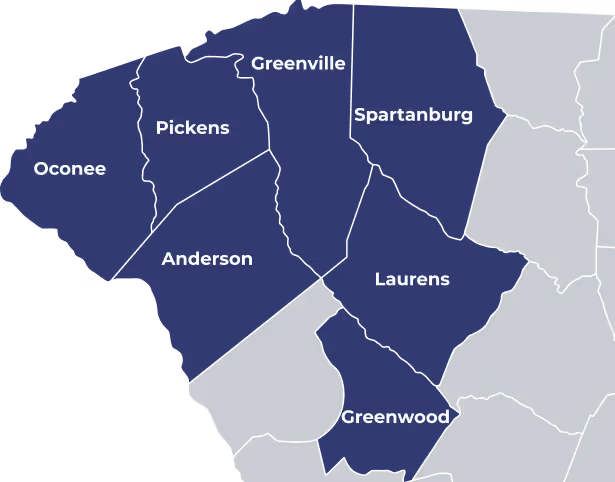
Serving All of Upstate South Carolina
We proudly provide compassionate family law representation across the Upstate of South Carolina. Our primary service areas include:
- Greenville County
- Spartanburg County
- Anderson County
- Oconee County
- Pickens County
- Laurens County
- Greenwood County
%20(3).avif)
Find Out Where Your Case Stands
Fill out the form below to share the basics of your situation. We'll reach out to schedule a private consultation and walk you through what a fair support order should look like for your family.
FAQs
Support generally continues until the child turns 18 and graduates high school, whichever comes later. It doesn't end automatically, though; the paying parent must file a motion to terminate it. Support can extend further for a child with a disability, and college costs can also factor into an extended arrangement.
A job loss can be grounds for a modification, but it doesn't automatically pause your obligation. You need to file for a modification as soon as possible; continuing to fall behind while waiting only builds up debt you'll still owe, and it won't excuse missed payments retroactively.
South Carolina generally does not allow support to be awarded retroactive to before a case was filed, so it's worth acting quickly once support becomes an issue. Once a case is filed, support can typically be ordered back to the filing date while the case moves through court.
No. South Carolina's guidelines consider both parents' incomes, the amount of time the child spends with each parent, health insurance and daycare costs, and the child's needs. It's a shared calculation, not a number based on one parent alone.
A new spouse's income generally isn't factored directly into the calculation, since support is based on the biological or legal parents' incomes. However, a significant change in your own financial picture, including new household expenses or additional children, can be relevant grounds to request a modification.